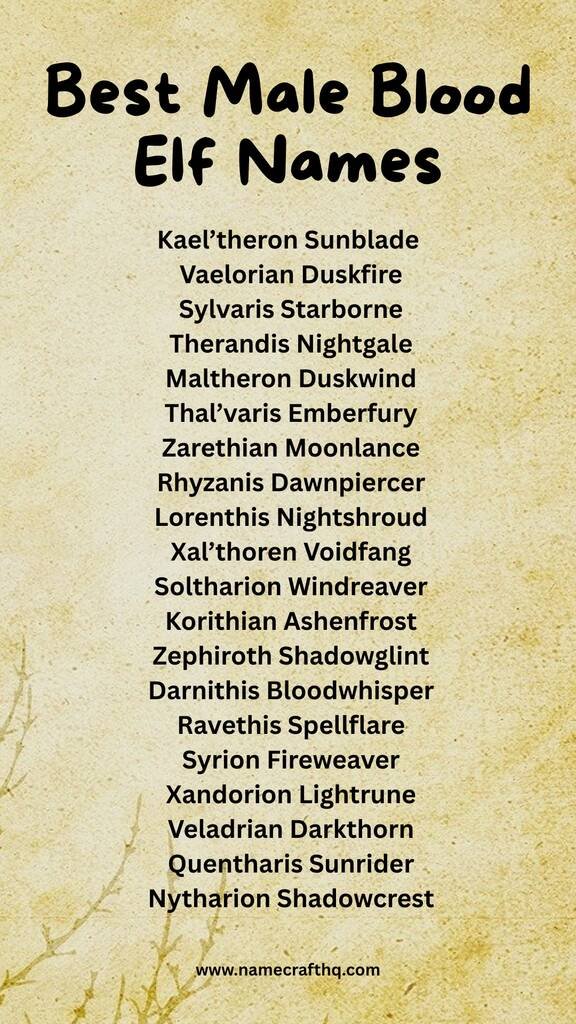
When you’re immersing yourself in an RPG or crafting a rich narrative, few things draw you in more than a name that just fits. For the elegant, resilient, and often tempestuous Blood Elves of Warcraft lore, crafting Blood Elf character names for RPGs & storytelling isn't just about picking pretty words; it’s about echoing a tragic history, a vibrant culture, and an unyielding will to survive. These aren't just characters; they're sin'dorei, children of the blood, and their names carry the weight of 7,000 years of splendor, devastation, and defiant magic.
This isn't just a list of names. It’s a comprehensive guide to understanding the linguistic soul of the Blood Elves, giving you the tools to forge names that feel authentic, resonant, and truly your own.
At a Glance: Key Takeaways for Blood Elf Naming
- Legacy of Quel'Thalas: Blood Elf names echo their high elven past, valuing elegance, melody, and ancient Thalassian roots.
- Sun & Magic: While Night Elves favor lunar themes, Blood Elf names often embrace concepts of sun, light, fire, and arcane power, honoring the Sunwell.
- Post-Scourge Influence: The "blood" theme became prominent after the Third War, signifying sacrifice and lineage.
- Gendered Sounds: Male names typically feature strong consonants and specific suffixes (e.g., -ar, -thor), while female names are softer, more flowing (e.g., -ria, -riel).
- Meaning Matters: Surnames often combine two concepts, reflecting family history, achievements, or ancestral ties.
- Practice Aloud: Always speak names aloud to test their flow and elegance.
Understanding the Blood Elven Soul: A Naming Foundation
To truly master Blood Elf naming, you must first grasp the core of their identity. They are not merely pretty faces; they are survivors. Once the High Elves of Quel'Thalas, their lives revolved around the radiant power of the Sunwell. This magical font was the heart of their kingdom, powering their society for millennia and weaving itself into the very fabric of their culture, language, and, by extension, their names.
The Scourge invasion, led by Arthas Menethil, brought this splendor to a devastating end. Nearly 90% of their population perished, their homeland ravaged, and the Sunwell corrupted. In the ashes, Prince Kael'thas Sunstrider rallied the remnants, renaming them sin'dorei — "children of the blood"—to honor their fallen kin and signify their royal lineage. This profound loss and defiant rebirth left an indelible mark, subtly influencing new naming trends while still clinging to the elegance of their past.
Their language, Thalassian, is an ancient tongue that evolved from Darnassian. It's rich, poetic, and imbued with a sense of history. This linguistic heritage is your most potent tool in crafting truly authentic Blood Elf names.
The Melodic Roots: Thalassian Language & Sound
Blood Elf names are characterized by their melodic, elegant quality. They roll off the tongue with a certain grace, often containing vowels that open up sounds and consonants that provide a touch of refined strength.
Common Phonetic Traits:
- Vowel Dominance: Often feature multiple vowels or vowel combinations (e.g., "ae," "ei," "ia," "eo") creating an open, lyrical sound. Think Kael'thas, Liadrin, Sylvanas.
- Soft & Hard Consonants: A balance of flowing 'l', 'm', 'n', 'r' sounds with sharper 'th', 's', 'sh' or 't' sounds. This creates a dynamic yet elegant flow.
- Apostrophes: Frequently used in both first and surnames, apostrophes (e.g., Lor'themar, Sunstrider, Bloodwrath) often denote a slight pause or a break in a compound word, adding a touch of ancient formality or specific pronunciation. They aren't just decorative; they have a purpose in Thalassian phonetics.
Themes Woven into Blood Elf Names
The core identity of the sin'dorei is reflected in the thematic elements that repeatedly appear in their names. These themes serve as excellent starting points for your own creative endeavors.
1. Light, Sun, and Day: A Reverence for the Sunwell
Before its corruption, the Sunwell was their lifeblood, a source of immense arcane power that also radiated light and warmth. This reverence for light, analogous to the sun, is deeply embedded in their cultural consciousness and is a primary differentiator from the Night Elves' lunar motifs.
- Elements to consider: Sun, Dawn, Bright, Glimmer, Light, Morning, Ray, Blaze, Gleam.
- Examples in Lore: Kael'thas Sunstrider, Coria Sunspire, Halduron Brightwing, Aethas Sunreaver.
- Your Character Ideas: Sunwhisper, Dawnbringer, Brightglade, Raystar, Morningshine.
2. Fire and Flame: Passion & Power
Closely related to the sun is the imagery of fire—representing not only destructive power but also warmth, passion, rebirth, and the potent magic wielded by many Blood Elves.
- Elements to consider: Blaze, Ember, Pyro, Cinder, Flame, Hearth, Scorch, Inferno, Spark.
- Your Character Ideas: Pyroblaze, Emberstar, Flamewrath, Cinderheart, Scorchwood.
3. Magic and Arcane Power: Their Innate Gift
Blood Elves are intrinsically linked to magic. Their society thrived on it, and their very survival often depends on its mastery. Names frequently hint at this deep connection.
- Elements to consider: Spell, Arcane, Magi, Rune, Mystic, Enchanter, Sorcer, Weave, Mana, Soul.
- Examples in Lore: Rommath (Grand Magister), Aethas Sunreaver (Archmage).
- Your Character Ideas: Spellbinder, Runesong, Mysticweaver, Arcanewind, Manaflow.
4. Blood: A Mark of Sacrifice and Lineage
This is a newer, post-Third War trend. The adoption of "Blood Elves" as their new name was a somber pledge to honor the nearly 90% of their people lost. Incorporating "blood" into a name or surname signifies deep respect for lineage, sacrifice, and a commitment to their people's future.
- Elements to consider: Blood, Sanguine, Crimson, Gore (less common for elegance, but possible for darker characters).
- Examples in Lore: Valeera Sanguinar, Driana Bloodwrath.
- Your Character Ideas: Bloodwhisper, Sanguinblade, Crimsonheart, Bloodvalor, Bloodgale.
- Pro-Tip: Use "Blood" carefully in first names. It's more commonly found in surnames or epithets to maintain the traditional elegance of a Blood Elf name.
5. Nobility and Royalty: Echoes of a Proud Past
The Blood Elves descended from a high elven society that thrived for millennia, marked by grand lineage and aristocracy. This pride in their heritage often translates into names that sound regal, sophisticated, or hint at noble origins. Longer, more elaborate names often suggest a higher social standing or ancient family line.
- Elements to consider: Lord, Lady, King, Queen, Crown, Noble, Royal, Heir, Gem, Star, Grand, Gold.
- Examples in Lore: Kael'thas Sunstrider (prince), Lor'themar Theron (regent lord), Lady Liadrin.
- Your Character Ideas: Goldenguard, Crownstrider, Starheir, Grandember, Gemspark.
Deconstructing Blood Elf First Names: Gendered Patterns
While there's always room for creative deviation, Blood Elf first names generally follow discernible patterns based on gender. These patterns help give the names their characteristic Thalassian sound.
Male Blood Elf Names: Strong & Sharp
Male names tend to be more resonant, often featuring stronger consonants and ending in suffixes that feel grounded or impactful.
- Common Suffixes: -ar, -ion, -ash, -thor, -thil, -rian, -dan, -dor, -el, -en.
- Sound Focus: Sharp "t," "th," "s" sounds. Clear, sometimes clipped, syllables.
- Examples:
- Kael'thas
- Lor'themar
- Dath'remar
- Rommath
- Halduron
- Aethas
- Anasterian
- Thalendor
- Malfur
- Faeldan
- Building Male Names:
- Start with a strong prefix: Kael-, Lor-, Dath-, An-, Rom-, Mal-, Thal-
- Add a melodic middle: -em-, -an-, -uri-, -len-
- Finish with a fitting suffix: -ar, -ash, -thor, -ian
- Try combining: Kael'dan, Thalenor, Anar'ion, Romthil, Malthor
Female Blood Elf Names: Flowing & Elegant
Female names are often softer, more lyrical, and feature suffixes that contribute to a graceful, melodic flow. Apostrophes are common and can break up names in an elegant way.
- Common Suffixes: -ria, -dris, -riel, -ora, -ana, -ia, -ra, -nara, -eia, -wyn.
- Sound Focus: Softer consonants, often 'l', 'm', 'n', 'r', 'v'. Emphasis on open vowels.
- Examples:
- Liadrin
- Sylvanas (though -nas is less common, the overall flow fits)
- Valeera
- Driana
- Coria
- Alluria
- Sinndris
- Lothria
- Faeldra
- Arlawyn
- Building Female Names:
- Start with a gentle prefix: Lia-, Syl-, Val-, Dri-, Co-, Al-, Sin-
- Add a flowing middle: -lee-, -nna-, -ora-, -wyn-
- Finish with a melodic suffix: -ria, -dris, -ana, -riel
- Try combining: Valdris, Lianara, Coriel, Sylveia, Driwyn
Apostrophes: More Than Just a Typo
The apostrophe in Blood Elf names isn't just for flair. In Thalassian, it often signifies a glottal stop or a slight pause, indicating that the two parts of the name (or word) are distinct but linked. It's an integral part of the pronunciation and contributes to the elegance.
- Examples: Lor**'themar, Kael'th**as.
- When to use: Consider it when joining two elements that might otherwise blend too smoothly, or to give a name a more ancient, formal feel. It works particularly well with names that have a sharper consonant sound immediately following it.
Crafting Meaningful Surnames
Blood Elf surnames are often as rich in meaning as their first names. They serve as a chronicle of family legacy, ancestral achievements, magical prowess, or deep connections to their homeland. They commonly combine two concepts, often referring to nature, magic, or significant historical events.
- Pre-Scourge Surnames: These often referenced natural beauty, magical affinity, or noble traits.
- Examples: Sunstrider (Royal lineage, sun/light theme), Brightwing (Ranger lineage, swiftness/light), Sunreaver (Magic/sun theme).
- Elements to combine: Sun, Moon, Star, Wind, Whisper, Shadow (less common for Blood Elves, but possible), Fire, River, Stream, Willow, Oak, Song, Flight, Wing, Blade, Heart, Stone, Gem, Gold, Silver, Arcane, Spell, Rune, Bloom, Crest, Peak, Glen, Grove.
- Your Creations: Starwhisper, Flameheart, Riverbend, Runeweaver, Silverwing, Oakensong.
- Post-Scourge Surnames: Following the devastation, some Blood Elves adopted new surnames that incorporate "blood" to honor their fallen kin and signify their resolve. These are particularly powerful for characters with a direct connection to the Third War's tragedy or those in martial orders like the Blood Knights.
- Examples: Bloodwrath, Sanguinar (meaning "blood" in a more formal, Latinized way).
- Elements to combine with "Blood" or "Sanguine": Wrath, Blade, Valor, Fury, Watcher, Guard, Oath, Shield, Heart, Thorn, Fist, Mark, Scar.
- Your Creations: Bloodblade, Bloodvalor, Sanguineguard, Bloodthorn, Bloodmark, Bloodoath.
- Tip: When combining elements for surnames, try to make them evocative and meaningful to your character's background or the family's historical role. "Sunstrider" implies one who walks with the sun, signifying royalty and power. "Brightwing" evokes speed, grace, and light, perfect for a ranger.
A Step-by-Step Guide to Crafting Your Blood Elf Name
Now that you understand the building blocks, let's put it all together into a practical process for Crafting Blood Elf Character Names for RPGs & Storytelling.
1. Define Your Character's Core Identity
Before you even think of specific words, consider who your character is:
- Gender: Male, Female (influences phonetic patterns).
- Class/Profession: Paladin, Ranger, Magister, Rogue, Artisan, Noble. This often influences surnames and thematic elements.
- Paladins/Blood Knights: Might lean towards "blood" in surnames, or terms of light, valor, justice.
- Farstriders/Rangers: Nature terms, wind, swiftness, keen senses.
- Magisters/Mages: Arcane, spell, rune, mystic, fire.
- Nobles: Longer, more elaborate names; themes of gold, star, crown.
- Personality: Stoic, fiery, melancholic, scholarly, defiant. How might this manifest in a name?
- Personal History & Heritage:
- Are they from an old noble line (like Sunstrider)?
- Did their family survive the Scourge and adopt a new, defiant name (like Bloodwrath)?
- Are they self-made, perhaps with a name reflecting a personal achievement or defining moment?
- Alignment/Disposition: Are they traditionally heroic, morally ambiguous, or fallen?
Mini-Case Snippet: - Character Concept: A female Blood Elf Ranger, descended from a family that survived the Scourge by hiding in the wilds, known for her quick thinking and keen eyesight.
- Naming Thoughts: "Ranger" suggests nature/wind themes. "Survivor" might imply defiance or resilience. "Keen eyesight" points to "bright," "gleam." Her family lineage might be hinted at in a surname.
2. Brainstorm Thematic Elements & Sounds
Based on your character's identity, list out relevant keywords and phonetic sounds.
- Themes: Sun, Light, Fire, Arcane, Blood, Wind, Star, Gem, Gold, Blade, Whisper.
- Male Sounds: Strong consonants, suffixes like -ar, -thor.
- Female Sounds: Flowing vowels, suffixes like -ria, -riel.
3. Generate First Name Components
- Prefixes: Kael-, Lor-, An-, Val-, Lia-, Co-, Syn-, El-
- Middle Sounds: -em-, -ael-, -dra-, -nar-, -rom-, -sha-
- Suffixes (Gender-specific): -ar, -ion, -thil (Male); -ria, -dris, -riel (Female)
Start mixing and matching. Don't be afraid to try unusual combinations. - For our Ranger: Let's try something flowing for a female.
Val(strong, perhaps a nod to valiance),ana(common suffix). Valana. Or maybeLiandra(combining Lia and a common ending).
4. Develop a Meaningful Surname
This is where your character's heritage and profession often shine. Combine two relevant thematic elements.
- For our Ranger, continuing:
- Option 1 (Nature/Swiftness): Wind + Whisper = Windwhisper. (Good for a Ranger)
- Option 2 (Light/Eyesight): Bright + Gleam = Brightgleam. (Good for keen eyesight)
- Option 3 (Resilience/Nature): Oak + Hearth = Oakenhearth. (Suggests strong roots and warmth despite hardship)
- Option 4 (Scourge connection): Perhaps her family adopted a "Blood" name: Bloodwing (swift, but with a mournful undertone).
- Let's go with Valana Brightwing for our ranger. It has a melodic first name and a surname that hints at her skills and connection to nature/light.
5. Speak it Aloud (Crucial Step!)
This is perhaps the most overlooked yet vital step. Say the full name out loud, several times.
- Does it flow well?
- Is it easy to pronounce?
- Does it sound elegant, powerful, or mysterious as intended?
- Are there any awkward pauses or difficult consonant clusters?
- Does it evoke the feeling of a Blood Elf?
- Testing Valana Brightwing: "Valana Brightwing." Sounds good! Melodic, elegant, and fitting.
6. Consult Resources & Refine
If you're stuck, look at lists of existing Blood Elf names or use a name generator for inspiration. You can then tweak elements to fit your character. Sometimes, seeing a similar structure can unlock your own ideas. To help you brainstorm efficiently, you can always Generate blood elf names using specialized tools that leverage these very principles.
Remember, the goal isn't just to find a name, but to find the name that truly elevates your character and makes them feel like a living, breathing part of the sin'dorei legacy.
Pitfalls to Avoid in Blood Elf Naming
Even with the best intentions, it's easy to fall into common traps. Here are some things to watch out for:
- Excessive "Blood" Themes: While valid, overusing "Blood" in every name can become cliché or lose its impact. Reserve it for characters where it truly signifies their personal or family history post-Scourge.
- Generic Fantasy Names: Blood Elves have a distinct flavor. Avoid names that could belong to any elf, human, or dwarf. Their Thalassian roots and thematic preferences are unique.
- Overly Complex or Unpronounceable Names: While elegance is key, don't make it so complex that no one (including you) can pronounce it consistently. An apostrophe or two is fine; a dozen special characters is not.
- Sounding Too Night Elf: Remember the distinction: Sun/Light for Blood Elves, Moon/Stars for Night Elves. Avoid names like "Moonwhisper" or "Starcaller" if you're aiming for true Blood Elf authenticity.
- Modern or Pop Culture References: Resist the urge to sneak in contemporary names or inside jokes. It breaks immersion instantly.
- Lack of Meaning: Every part of a Blood Elf name, especially the surname, should ideally carry some weight or story. A name like "Fred Smith" wouldn't just sound wrong; it would lack the depth of Thalassian naming tradition.
Common Questions About Blood Elf Naming
Q: Can a Blood Elf have a human-sounding name?
A: Generally, no. While Blood Elves interact with other races, their names are deeply rooted in their Thalassian heritage. A human-sounding name would feel out of place and break immersion, suggesting they were raised entirely outside their culture, which is rare for core Blood Elves.
Q: Do Blood Elf names have specific meanings in Thalassian?
A: Yes, many elements used in Blood Elf names derive from Thalassian words, though full dictionaries are not widely available in lore. However, the thematic elements (sun, light, fire, arcane, blood) are direct translations of concepts important to their language and culture. When crafting, focus on the concepts rather than trying to find a perfect dictionary translation for every syllable.
Q: Are apostrophes mandatory in Blood Elf names?
A: No, not mandatory, but they are very common and add a distinct, authentic flair. They often indicate a specific pronunciation or a historical merging of words. Using them sparingly and thoughtfully can enhance the name's elegance and Thalassian feel.
Q: Can a Blood Elf name be very short, like one or two syllables?
A: While less common for first names, short, punchy surnames (e.g., "Thorn" as part of Bloodthorn) can exist. First names tend to be a bit longer, often two or three syllables, to maintain their melodic quality. However, a single-syllable first name with a longer, more elaborate surname can work if it flows well.
Q: How do I make sure my Blood Elf name doesn't sound cliché?
A: Avoid overly literal translations of traits (e.g., "Fire-mage" -> "Flamemage"). Instead, use evocative imagery. Combine elements in unique ways. For instance, instead of "Lightshield," try "Brightguard" or "Suncrest." The key is to blend tradition with a touch of personal flair that reflects your specific character's nuances.
The Enduring Legacy: Naming with Purpose
Crafting Blood Elf Character Names for RPGs & Storytelling is more than an exercise in linguistics; it's an act of cultural immersion. Each name you forge carries centuries of history, the lingering scent of arcane power, and the defiant spirit of a people who faced utter annihilation and chose to rebuild.
By understanding the nuanced interplay of Thalassian sounds, the thematic significance of sun and blood, and the historical context of Quel'Thalas, you're not just naming a character – you're breathing life into an avatar of the sin'dorei. So take your time, speak the names aloud, and let the rich tapestry of Blood Elf lore guide your hand. Your character deserves a name that truly resonates, a name that tells a story even before the first word is spoken.